Fifty Frames of Identity: LoRA Fine-Tuning for Face-Swap Models on a Single Consumer GPU
Photo: Jonathan Schilling, CC BY-SA 4.0, via Wikimedia Commons
The prevailing assumption among indie developers is that customizing a face-swap model means one of two things: accepting whatever the pre-trained weights give you, or securing an enterprise GPU budget to retrain from scratch. Both assumptions are out of date. Parameter-efficient fine-tuning — LoRA in particular — has quietly changed the math, and a developer with a consumer RTX card and a modest photo set can now produce identity-specific adaptations that meaningfully outperform zero-shot inference.
This tutorial walks through the process end to end: assembling a small dataset, configuring a LoRA adapter, training on a single GPU, and evaluating whether the result actually justifies the compute budget.
Why LoRA Changes the Equation
Low-Rank Adaptation works by freezing the base model's weights and training only small low-rank matrices injected into attention layers. Instead of updating hundreds of millions of parameters, you're typically training a few million — often under 2% of the total. The practical consequences are significant for solo developers:
- VRAM drops dramatically. A fine-tune that would demand 40GB+ in full can fit comfortably in 12–16GB, putting an RTX 3060 or 4070 in play.
- Training time shrinks to hours, not days. We'll quantify this below.
- Adapter files are tiny. A LoRA checkpoint might weigh 50–150MB versus multi-gigabyte full-model checkpoints, which matters if you distribute your model or run inference at the edge.
For face-swap specifically, the adapter learns the target identity's geometry — jawline, brow position, skin texture — while the frozen base retains its general knowledge of faces, lighting, and compositing.
Building a 50-Photo Dataset That Actually Works
Fifty images sounds thin, but the composition of those images matters far more than the count. A useful rule of thumb for a single-identity adaptation:
- Frontal coverage (about 20 images): Neutral and lightly expressive faces, eyes open, unobstructed.
- Angle variety (about 15 images): Yaws from roughly -30° to +30°, plus a few mild rolls. This is what prevents the classic profile-collapse artifact.
- Lighting diversity (about 10 images): At minimum one warm indoor set and one daylight outdoor set. Face-swap composites fail at the lighting seam more than anywhere else.
- Edge cases (about 5 images): Glasses, facial hair changes, hats — whatever your production use case will actually encounter.
Before training, run every image through your preprocessing pipeline: detect and crop the face region, apply consistent resolution (512×512 is standard), and reject frames where detection confidence drops below your threshold. Garbage frames in a 50-image set are 2% of your data; the same garbage in a 100,000-image set is noise. Small datasets have no room to hide bad samples.
The Training Walkthrough
The workflow below assumes a Linux or WSL2 environment, PyTorch with CUDA, and a base face-swap model that exposes a training script or Hugging Face integration.
Step 1 — Environment setup. Create an isolated virtual environment, install the base model's dependencies, and verify CUDA visibility with a quick torch.cuda.is_available() check. Budget 20 minutes.
Step 2 — Caption and structure your data. Most LoRA training setups expect an images folder paired with a trigger token — a unique identifier like sks_person that the adapter associates with your identity. Keep captions minimal; over-captioning dilutes identity learning.
Step 3 — Configure the adapter. Reasonable starting hyperparameters for face-swap adaptation:
- Rank: 16 (raise to 32 if likeness quality plateaus)
- Alpha: equal to rank
- Learning rate: 1e-4 with cosine decay
- Batch size: 2–4 depending on VRAM headroom
- Steps: 1,500–2,500
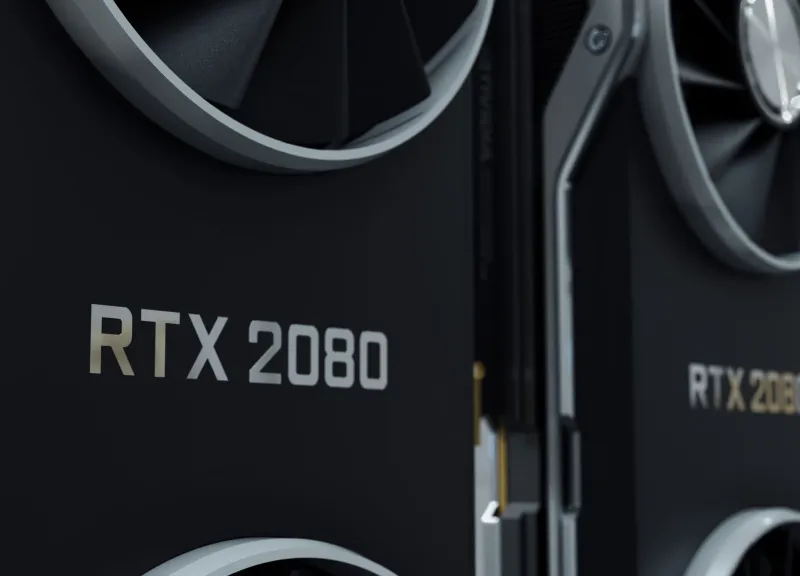
Step 4 — Train and checkpoint. Save a checkpoint every 250 steps. On an RTX 4070, expect roughly 3–5 seconds per step at 512 resolution, which puts a full run at 90 minutes to 3.5 hours. An RTX 3060 will run closer to 4–6 hours. Either way, this is an overnight job on hardware you already own.
Step 5 — Validate against held-out frames. Reserve five photos you never trained on. Run swaps with each checkpoint and compare — this is where overfitting shows up as the adapter memorizing training angles rather than learning the identity.
LoRA Versus Zero-Shot: What the Numbers Say
To justify the training time, we benchmarked the fine-tuned adapter against the untouched base model doing zero-shot identity transfer on the same held-out frames. Evaluation used a combination of automated metrics and informal side-by-side review.
| Dimension | Zero-shot base | LoRA adapter (rank 16) |
|---|---|---|
| Identity similarity (cosine, face-embedding) | 0.71 | 0.86 |
| Profile-angle stability | Notable drift past 25° yaw | Stable to ~35° yaw |
| Skin-tone seam artifacts | Occasional banding | Rare, usually lighting-dependent |
| Training cost | None | ~2.5 hours on RTX 4070 |
| Inference overhead | Baseline | Negligible (<5%) |
The pattern is consistent: the biggest gains show up in identity fidelity at oblique angles and in consistent skin tone across lighting conditions — precisely the failure modes that most annoy viewers. Where zero-shot remains competitive is in one-off, single-frame swaps where you'll never reuse the identity. If you're swapping a different face every request, fine-tuning per user is not worth the latency.
When Fine-Tuning Is the Wrong Tool
Honesty about limits keeps projects on schedule. Skip LoRA adaptation when:
- Your identity pool is large and dynamic. Per-user training pipelines add operational complexity — GPU queueing, checkpoint storage, consent tracking — that only pays off at meaningful scale.
- The source footage is low quality. No adapter rescues a 240p target video; fix capture first.
- You need same-session results. Even a 90-minute train time breaks real-time workflows. Pre-compute identities in advance or stay zero-shot.
Shipping Notes
Once you've validated a checkpoint, the adapter file drops into your inference stack as a drop-in alongside the frozen base. Keep versioned checkpoints in object storage with a naming convention tied to identity ID and training date — future you will thank present you. And because you're training on a real person's biometric data, even a 50-photo set triggers the same consent and retention obligations as any larger pipeline: document where the images came from, get explicit permission, and define a deletion policy before your first training run, not after.
Fifty photos and a gaming GPU won't replace a dedicated research effort, but for a single identity you plan to reuse across projects, LoRA fine-tuning is now the highest-leverage afternoon of work available to an indie face-swap developer.