Chasing Zero Lag: Engineering Real-Time Face-Swap Systems That Can Keep Up With Live Video
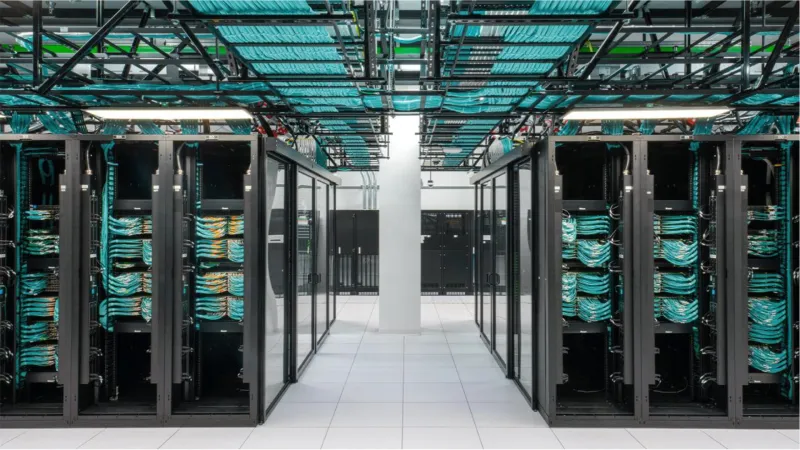
Photo: GPU server hardware data center latency real-time video processing, via cdn.mos.cms.futurecdn.net
When a face-swap pipeline runs on a pre-recorded file, a few hundred milliseconds of processing overhead is largely invisible to the end user. The footage renders, the swap looks clean, and the viewer never knows how long each frame took to transform. Live video is an entirely different discipline. On a streaming platform, a gaming broadcast, or a video conferencing tool, latency is not an abstraction — it is a visceral, disruptive experience that breaks immersion, delays interaction, and erodes user trust almost immediately.
For developers building real-time face-swap applications, the engineering challenge is not simply "make it fast." It is a structured negotiation between computational accuracy, hardware constraints, network topology, and acceptable visual quality. Understanding where time disappears in a face-swap pipeline is the prerequisite for getting it back.
Anatomy of a Real-Time Face-Swap Pipeline
Before optimizing anything, it helps to decompose where latency actually accumulates. A typical real-time face-swap system involves several sequential stages: frame capture and buffering, face detection and landmark extraction, feature encoding, swap model inference, blending and post-processing, and finally frame output or re-encoding for streaming.
Each stage contributes its own overhead. Face detection — particularly when using high-accuracy models like RetinaFace or MediaPipe — can consume anywhere from 5 to 30 milliseconds per frame depending on resolution and hardware. The swap model inference itself, especially with transformer-based architectures, can easily exceed 50 milliseconds on mid-range GPUs. Post-processing steps such as color correction, boundary feathering, and upscaling add further cost. When these stages run sequentially on a 30 fps stream, the cumulative budget per frame is approximately 33 milliseconds — a ceiling that most unoptimized pipelines exceed by a significant margin.
GPU Optimization: Getting More From the Hardware You Have
The GPU is both the engine and the bottleneck of most face-swap workloads. Several optimization strategies can meaningfully reduce inference time without requiring a hardware upgrade.
Model quantization is frequently the highest-leverage intervention available. Converting swap models from 32-bit floating-point weights to INT8 or FP16 precision can cut inference time by 30 to 60 percent on compatible hardware, with minimal perceptible quality loss for most use cases. NVIDIA's TensorRT framework is particularly well-suited for this, offering graph optimization and layer fusion on top of quantization.
Batching strategy also deserves careful consideration. While batching multiple frames together can improve GPU utilization in offline scenarios, it introduces additional buffering latency in real-time contexts. Developers targeting interactive applications — video calls, live gaming overlays — should generally favor single-frame inference to minimize end-to-end delay, even if this leaves some GPU throughput on the table.
Asynchronous pipeline execution is another powerful technique. Rather than waiting for each stage to complete before beginning the next, a well-designed pipeline stages face detection, inference, and post-processing across consecutive frames in parallel. This approach does not reduce per-frame processing time, but it dramatically reduces the perceived latency from the user's perspective by keeping the GPU continuously occupied.
Edge Computing: Moving the Inference Closer to the Source
For applications where the processing infrastructure is remote — cloud-based swap services, for instance — network round-trip time can dwarf the actual inference cost. A pipeline that runs inference in 40 milliseconds but requires a 120-millisecond round trip to a data center in a different region delivers a user experience that feels sluggish regardless of how well the model is optimized.
Edge computing addresses this by relocating inference workloads closer to the point of capture. Content delivery network (CDN) providers such as Cloudflare, AWS Wavelength, and Fastly now offer edge compute environments with GPU support, enabling developers to run inference at facilities geographically proximate to their users. For a streamer in Chicago, routing swap inference through a Midwest edge node rather than a Virginia data center can reduce round-trip latency by 60 to 80 milliseconds — a difference that is immediately perceptible.
On-device inference represents the extreme end of this spectrum. Running a sufficiently lightweight swap model directly on the user's local GPU — whether a desktop workstation or a recent Apple Silicon Mac — eliminates network latency entirely. The trade-off is model capability: on-device constraints typically require smaller, less accurate architectures. Developers must honestly assess whether the quality of an on-device model is sufficient for their specific use case before committing to this path.
The Accuracy-Speed Trade-Off: Making Deliberate Choices
There is no universally correct answer to how much accuracy a real-time face-swap application should sacrifice for speed. The right balance depends entirely on context.
A live entertainment streaming application where the swap is part of a stylized visual effect can tolerate lower fidelity than a professional video conferencing tool where the goal is a convincing, photorealistic identity transformation. A gaming overlay running at 60 fps has a tighter per-frame budget than a live interview broadcast at 24 fps.
Developer teams should establish explicit latency targets before selecting or training a swap model — not after. Working backward from an acceptable end-to-end latency figure (say, 100 milliseconds for a live streaming context) and subtracting known fixed costs such as capture buffering and encoding overhead will define the inference budget available to the swap model. That budget should drive model architecture selection, not the other way around.
Lighter architectures such as SimSwap or MobileFaceSwap are specifically designed with inference efficiency in mind and are worth evaluating before defaulting to heavier, higher-fidelity models. In many streaming scenarios, the perceptual quality difference is negligible at typical viewing resolutions and bitrates.
Practical Profiling: Finding the Real Bottleneck
Developers frequently optimize the wrong component because they are working from intuition rather than instrumentation. Before investing significant engineering effort in GPU tuning or edge deployment, instrument the entire pipeline with precise timing measurements at each stage boundary.
Tools such as NVIDIA Nsight Systems, PyTorch Profiler, and custom frame-timing logs can identify whether the dominant cost is actually inference, or whether it is I/O, frame decoding, or post-processing. In several real-world implementations reviewed during the development of this article, post-processing steps — particularly high-quality upscaling and perceptual blending — accounted for a larger share of total latency than the swap model inference itself. Optimizing the wrong stage wastes engineering resources while leaving the actual bottleneck untouched.
Conclusion
Real-time face swapping is a solvable engineering problem, but it demands a different discipline than offline processing. The developers who build performant live-swap systems are not necessarily those with the most powerful hardware — they are those who understand their latency budget, instrument their pipelines rigorously, and make deliberate, informed trade-offs between accuracy and speed. Every millisecond recovered is a millisecond of immersion preserved, and in live applications, immersion is the product.