Beyond Almost Human: A Developer's Technical Roadmap for Escaping the Uncanny Valley in Face-Swap Output
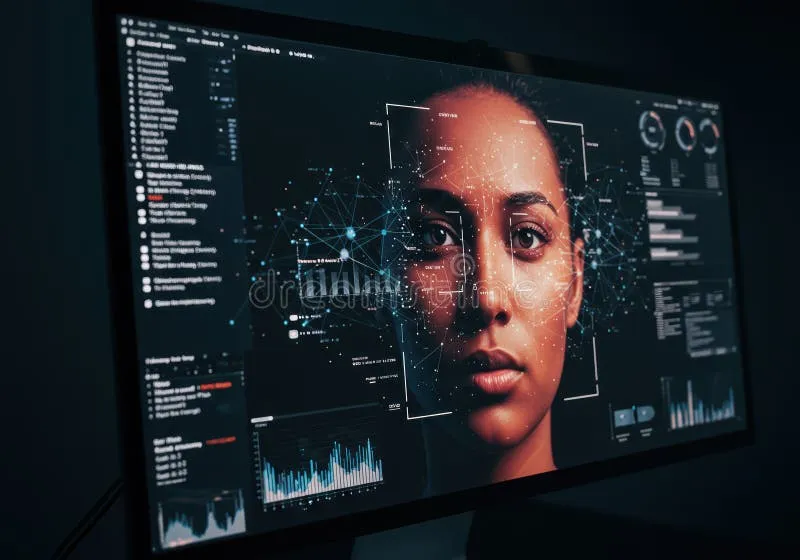
Photo: computer vision facial recognition neural network developer screen code, via thumbs.dreamstime.com
There is a particular kind of failure that is worse than obvious failure. When a face-swap result looks broadly human but carries subtle wrongness—a flicker in the eye movement, a skin texture that catches light incorrectly, a smile that arrives a half-frame too late—viewers register unease before they can articulate why. This is the uncanny valley in practice, and for developers building production-grade face-swap systems, it represents one of the most technically demanding problems in applied computer vision.
Understanding why this happens requires engaging with both the perceptual architecture of the human brain and the specific computational deficiencies that manifest in current model pipelines. Neither domain alone provides a complete answer. Together, they map a clear path toward genuinely photorealistic output.
What the Brain Is Actually Detecting
Humans are, evolutionarily speaking, extraordinarily sensitive face-processing machines. The fusiform face area—a region in the temporal lobe—activates specifically in response to faces and has been refined over millennia to detect social cues, emotional authenticity, and biological vitality. When a synthetic face violates any of the dozens of implicit rules this system has internalized, the result is not conscious skepticism. It is visceral discomfort.
Research in social neuroscience suggests that the uncanny valley response is driven largely by a mismatch between predicted and observed biological signals. The brain constructs a model of what a face should do given its apparent emotional state, age, and context. When the observed face deviates from that prediction—even by margins invisible to conscious inspection—the discrepancy registers as threat or wrongness.
For face-swap developers, this means the problem is not merely aesthetic. It is predictive. Your output must satisfy a probabilistic model of human facial behavior that viewers carry implicitly, and that model is far more sophisticated than any single quality metric.
The Four Perceptual Fault Lines
Breaking down uncanny valley triggers into discrete categories makes remediation tractable. Most failures cluster around four areas.
1. Micro-Expression Latency and Suppression
Authentic emotional expressions involve dozens of facial action units firing in precise temporal sequences. A genuine smile, for instance, begins with the zygomaticus major pulling the lip corners upward, followed almost immediately by the orbicularis oculi crinkling the outer eye corners. The sequence takes roughly 300–400 milliseconds and carries a characteristic acceleration-deceleration curve.
Face-swap models trained on static image pairs or low-framerate video often fail to reproduce this temporal signature. The resulting expression arrives abruptly, peaks without the natural acceleration phase, or suppresses the secondary muscle activations entirely. Viewers perceive the output as emotionally flat or mechanically imposed, even when the spatial geometry is accurate.
Technical remediation: Incorporate temporal consistency losses during training using high-framerate source video (60fps or higher where available). Evaluate output using Facial Action Coding System (FACS) scoring to verify that action unit co-occurrence patterns match naturalistic distributions.
2. Subsurface Scattering and Skin Translucency
Human skin is not a surface—it is a layered, semi-translucent medium through which light penetrates, scatters, and re-emerges. This subsurface scattering effect is responsible for the warm, living quality of real skin under direct illumination. It causes the edges of ears to glow pink in backlight and gives cheeks a slightly luminous quality under diffuse sources.
Many face-swap pipelines treat the face as an opaque texture map and composite it accordingly. The result is skin that looks painted rather than inhabited—technically correct in albedo but wrong in its interaction with light.
Technical remediation: Post-processing passes using physically-based rendering (PBR) shaders that simulate subsurface scattering can recover much of this quality. Libraries such as OpenCV combined with custom GLSL shaders allow developers to apply scattering approximations in real time. For offline pipelines, integrating a neural relighting stage trained on multi-illumination facial datasets produces more robust results.
3. Gaze Coherence and Sclera Dynamics
Eyes are the single most scrutinized region of the human face. The brain allocates disproportionate processing resources to gaze direction, pupil dilation, and sclera coloration—all of which carry social meaning. Face-swap models frequently introduce subtle gaze misalignments: the iris positioned a pixel or two off-center relative to the scene's implied focal point, or pupil dilation inconsistent with the ambient light level visible in the frame.
Additionally, the sclera is not uniformly white. It carries subtle vascular patterns, slight yellowing toward the inner canthus, and moisture-related specular highlights that shift with blink dynamics. Flattening these details produces eyes that read as artificial regardless of how accurate the surrounding geometry is.
Technical remediation: Implement a dedicated eye-region refinement network trained specifically on high-resolution iris and sclera data. Gaze estimation models (such as those built on the MPIIGaze or ETH-XGaze datasets) can be used to validate output gaze vectors against scene geometry before final composite.
4. Boundary Blending and Occluder Handling
The perimeter of a swapped face—where the generated region meets the original video frame—is a persistent source of artifacts. Hard edges, frequency mismatches in texture detail, and incorrect handling of occluders (hair strands, glasses frames, hands passing in front of the face) all break the perceptual seal that allows a viewer to accept the composite as unified.
Technical remediation: Feathered alpha blending with frequency-aware masks outperforms hard segmentation boundaries. For occluder handling, a two-pass approach works well: first generate the face-swap without occluders using inpainting, then re-composite the original occluder layer on top with appropriate depth ordering. Tools like Segment Anything Model (SAM) can accelerate occluder isolation at scale.
Training Data Curation as a First-Order Concern
Many uncanny valley failures originate not in the inference pipeline but in the training data used to build the model. Datasets dominated by frontal, well-lit, emotionally neutral faces produce models that degrade rapidly under off-axis angles, mixed illumination, or expressive motion. Developers often discover this limitation only after deployment, when edge-case inputs expose the model's distributional blind spots.
A deliberate data curation strategy should prioritize:
- Angular diversity: Source identities captured across the full yaw and pitch range (±45 degrees minimum)
- Illumination variance: Samples spanning hard directional light, diffuse overcast, mixed color temperature, and low-key conditions
- Expression completeness: Coverage of all primary FACS action units, including disgust, contempt, and pain—expressions frequently underrepresented in standard datasets
- Age and skin tone breadth: Models trained on narrow demographic ranges generalize poorly and introduce systematic artifacts on out-of-distribution subjects
Building a Perceptual Quality Evaluation Loop
Standard image quality metrics—SSIM, PSNR, FID—correlate poorly with human perceptual judgments of face-swap plausibility. A model can achieve strong scores on these benchmarks while still producing output that triggers uncanny valley responses in real viewers.
Developers should augment automated metrics with structured human evaluation using protocols borrowed from psychophysics research. A two-alternative forced choice (2AFC) paradigm—where evaluators choose which of two clips appears more natural—provides reliable signal with relatively small rater pools. Targeting 30–50 evaluators per condition is typically sufficient to detect meaningful quality differences.
For continuous integration environments, lightweight perceptual models such as LPIPS (Learned Perceptual Image Patch Similarity) offer a reasonable proxy, though they should be treated as a floor rather than a ceiling for quality assessment.
The Compounding Effect of Small Corrections
No single intervention eliminates uncanny valley perception. The phenomenon is cumulative: each individual artifact may fall below the threshold of conscious detection, but their combined effect crosses it. This means the developer's task is less about solving one large problem and more about systematically reducing the contribution of many small ones.
A structured remediation roadmap—addressing temporal consistency, skin rendering, gaze coherence, and boundary blending in sequence—typically yields compounding perceptual improvements that exceed what any single fix could achieve. The goal is not perfection on any one dimension but a holistic output that satisfies the brain's predictive model of biological human appearance.
At FaceSwap AI, the tools and APIs available to developers today make this level of systematic refinement achievable without requiring research-lab resources. The uncanny valley is not an immovable boundary. It is an engineering problem with tractable solutions—and closing the remaining gap is, increasingly, a matter of methodical execution rather than fundamental scientific breakthrough.