Rewinding Time: How Hobbyists Are Placing Lost Loved Ones Back Into the Frame
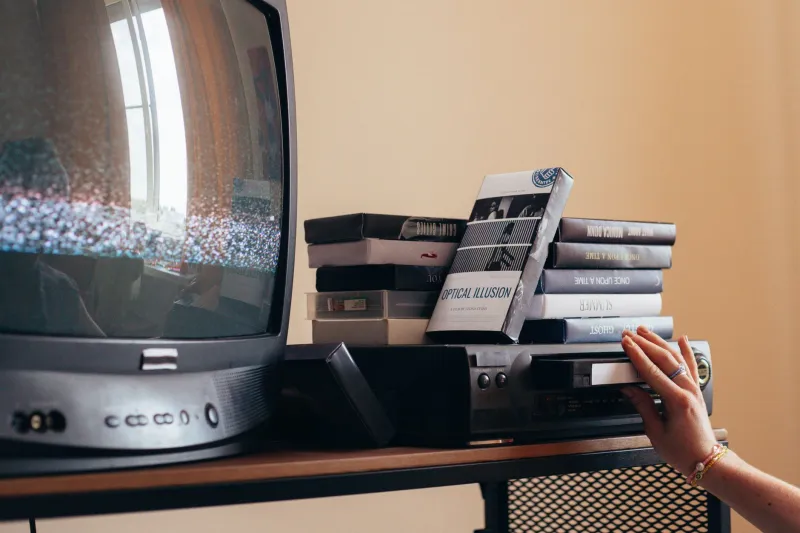
The tape hisses, the image jumps, and there it is: a Fourth of July barbecue from 1994, shot on a camcorder the size of a brick. Everyone is there — except the one person everyone wishes could be. For a quiet but growing community of American hobbyists, that gap in the footage is no longer a closed door. With consumer-grade AI face-swapping tools, they are rebuilding family archives that time, distance, and death left incomplete.
The Emotional Case for a Synthetic Cameo
Ask around in genealogy forums and Reddit's archival communities, and the same scenario surfaces again and again. A grandfather died before his granddaughter's wedding. A sister moved overseas before the last big family reunion was filmed. The footage exists; the person simply was never in front of that particular lens.
Face-swap technology offers something no photo restoration service can: presence. Rather than enhancing what was captured, these creators are adding what wasn't — dropping a late relative's likeness into scenes they never appeared in, so a wedding video plays with the whole family on screen. Unlike commercial deepfake entertainment, the motivation here is rarely spectacle. It is closer to mourning, memory, and the very human urge to finish an unfinished picture.
Why Old Footage Is the Hardest Test Case
Professionally shot video is forgiving. A 1996 VHS transfer is not. Working with legacy family footage introduces a stack of technical problems that most face-swap tutorials never address.
Low resolution. A digitized VHS frame carries roughly 240 lines of resolution — a fraction of what modern face-swap models expect. Before any swapping begins, hobbyists routinely run the footage through AI upscalers, then apply temporal smoothing to reduce the flicker that upscaling alone produces.
Motion blur and interlacing. Camcorder-era footage is riddled with interlacing artifacts and smeared frames. Deinterlacing with a quality tool like QTGMC (a mainstay of the video restoration community) is a standard first step, because face detection models struggle badly on interlaced source material.
Sparse reference material. The target face — often a relative who died decades ago — may exist only in a handful of grainy photographs. A single reference image produces stiff, uncanny results. Experienced practitioners gather every available photo across angles and ages, then curate the strongest two dozen frames before training or inference.
Color drift and lighting mismatch. Old footage shifts in color temperature, and indoor camcorder lighting is rarely flattering or consistent. Matching the swapped face to the scene — color grading, grain matching, even adding a subtle VHS-style softness back over the composite — is often the difference between a moving result and an obvious fake.
A realistic weekend workflow looks like this: deinterlace and upscale the source footage, extract clean reference frames of the target face, run the swap in short segments rather than the full video, then composite, grade, and re-degrade the output so it sits naturally inside the original tape's aesthetic.
The Scene That Never Happened
Some hobbyists go further than inserting a face into an existing shot. They construct scenes that never occurred — two siblings, now estranged, laughing together in a backyard neither visited in twenty years. These are reconstructions, not restorations, and they raise the emotional stakes considerably.
Practitioners describe these projects as gifts: a video made for an aging parent, showing her children together one more time. Critics would call them fabrications. Both are right, which is why transparency within the family matters. Most creators in this space recommend labeling such videos clearly when sharing them — a simple title card noting the scene was digitally reconstructed prevents a future misunderstanding when the archive passes to another generation.
The Ethics of Editing the Dead
Posthumous likeness sits in a legal gray zone in the United States. Several states — Tennessee with its ELVIS Act, New York with its postmortem right of publicity law — have extended likeness protections after death, but these primarily target commercial exploitation. A private family video made out of love rarely triggers them.
Law, however, is a poor proxy for ethics. Practical questions deserve answers before the render button is pressed:
- Would the person have consented? For many families, the answer is a heartfelt yes — the swap honors a wish the relative never got to fulfill. For others, a private person who avoided cameras in life, the answer is uncertain.
- Who speaks for the deceased? Best practice is to involve the widest possible circle of immediate family before creating anything, especially when the likeness of someone who died young is involved.
- Where will it live? A video shown at a reunion is different from the same video uploaded publicly. Keeping synthetic family scenes private, or shared only within the family, dramatically reduces the risk of misuse or misinterpretation.
There is also a subtler risk: the synthetic scene replacing the real memory. Grief counselors and digital-legacy researchers have begun cautioning that a polished reconstruction can subtly overwrite how a family remembers an event. The most thoughtful creators treat these videos as complements to the archive, never substitutes for it.
A New Chapter for the Home Movie
The home movie has always been a living document — spliced, copied, digitized, and passed down. AI face-swapping is simply the newest tool in that lineage, one that can close gaps left by distance and death. Used with care, clear labeling, and family consensus, it turns a stack of decaying tapes into something closer to the complete story a family wishes it had.
The technology is accessible. The workflow is learnable in a weekend. The judgment required is the hard part — and it is the part no model can automate.