From Set to Screen: How Face-Swap Technology Is Quietly Rewiring Professional Production Workflows
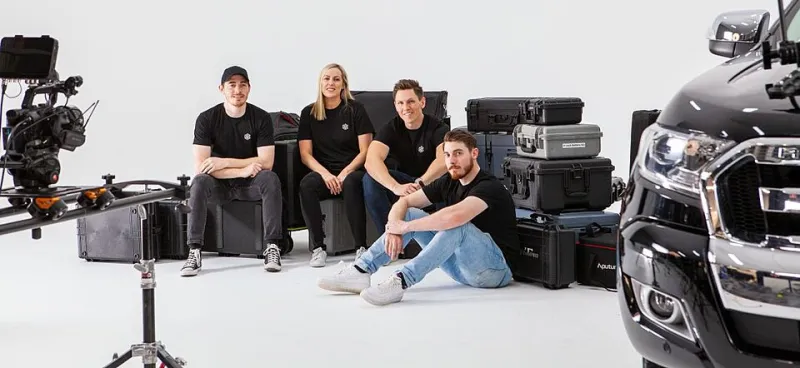
Photo: Jonathon shaw, CC BY-SA 4.0, via Wikimedia Commons
For years, the phrase "face swap" conjured images of viral social media clips and tabloid-ready celebrity deepfakes. That association, while understandable, has increasingly become a liability for serious practitioners who recognize the technology's genuine utility. Across Hollywood back lots, remote broadcast booths, and independent streaming setups, AI-powered facial replacement is quietly becoming as unremarkable—and as indispensable—as green-screen compositing once was.
The shift is not merely cosmetic. It reflects a maturation of the underlying models, a reduction in processing latency, and, critically, a growing willingness among production professionals to codify ethical standards around synthetic media. The result is a technology that is no longer asking permission to sit at the professional table.
The Production Case: Where Face-Swap Solves Real Problems
The most compelling early adoption has come from productions that face logistical constraints rather than creative ambitions. Consider the challenge of stunt coordination. When a lead actor's face must appear in a physically demanding sequence—one that insurance riders or union agreements prohibit them from performing—facial replacement offers a middle path that preserves both safety and narrative continuity.
Productions working on episodic television have begun using face-swap pipelines to reduce the number of on-set days required from principal talent. A body double performs the physically intensive blocking; the lead actor records reference footage in a controlled studio environment; and the composited result reaches the edit suite without either party ever sharing a location. For productions distributed across multiple time zones—a reality that has only intensified since the pandemic-era normalization of remote workflows—this decoupling of performance from physical presence represents a meaningful operational advantage.
Live sports broadcasting has explored a related application: real-time facial replacement for injured players during highlight repackaging, allowing archival footage to be updated for current promotional use without reshooting. While this remains a contested editorial practice, several regional sports networks have piloted the approach under strict disclosure frameworks.
Technical Requirements for Broadcast-Quality Integration
Achieving results that survive scrutiny at broadcast resolution demands considerably more than consumer-grade tooling. Production teams integrating face-swap into professional pipelines typically contend with several non-negotiable technical thresholds.
Resolution and frame rate fidelity. Broadcast standards in the US—whether 1080i for traditional television or 4K UHD for streaming platforms—require models trained on high-resolution source data. Models optimized for web-resolution output will introduce perceptible artifacts when upscaled. Teams should validate model output at native delivery resolution before committing to a pipeline.
Temporal consistency. Single-frame accuracy is a lower bar than temporal stability across a sequence. Flicker, jitter, and micro-expression inconsistencies that are invisible in still images become immediately apparent in motion. Production-grade implementations typically incorporate temporal smoothing layers and multi-frame context windows to maintain coherence across cuts.
Color science alignment. Facial replacement that ignores the color grading applied to source footage will produce skin tones that read as foreign to the surrounding image. Integrating LUT-aware preprocessing—or performing the swap on graded footage rather than camera-raw material—is a workflow consideration that separates professional implementations from hobbyist ones.
Latency budgets for live production. For live streaming applications, the acceptable latency window is narrow. Broadcast delay tolerances typically sit between 100 and 300 milliseconds before lip-sync drift becomes perceptible. Hardware acceleration via GPU clusters, combined with model quantization, has brought several commercial face-swap APIs within this range, but teams should benchmark against their specific delivery infrastructure rather than relying on vendor specifications alone.
Accessibility as a Driver of Adoption
One underreported application domain is accessibility. Productions serving deaf and hard-of-hearing audiences have experimented with face-swap as a mechanism for inserting sign language interpreters into archival footage without the visual intrusion of a traditional picture-in-picture overlay. By replacing a secondary character's face with that of a certified interpreter performing the corresponding ASL, productions can deliver a more immersive experience for affected viewers.
Similarly, dubbing operations—long a staple of international content distribution—are exploring facial replacement as a complement to audio dubbing. Rather than accepting the uncanny valley of mismatched lip movements, studios can align synthesized facial motion to the dubbed audio track, producing a result that reads as native-language performance to the audience. Several streaming platforms distributing content into non-English-speaking US markets have quietly incorporated this approach into their localization pipelines.
Maintaining Credibility: Disclosure and Production Ethics
The professional adoption of face-swap technology carries an obligation that purely technical discussions often elide: the responsibility to disclose synthetic media to audiences and, where applicable, to regulatory bodies.
The Screen Actors Guild–American Federation of Television and Radio Artists (SAG-AFTRA) has been increasingly vocal about the use of digital likeness technology, and productions operating under union agreements must navigate consent and compensation frameworks that are still being actively negotiated. Ignoring these frameworks is not merely an ethical failure—it is a contractual and legal exposure.
For non-union productions and streaming-native content, best practice involves clear audience disclosure in credits or metadata, particularly when synthetic facial media is used to depict real individuals. The emerging norm among credible production houses is to treat face-swap disclosures with the same diligence applied to visual effects credits.
Production credibility, ultimately, is not threatened by the use of synthetic media. It is threatened by its concealment. Teams that build disclosure into their workflow from the outset—rather than retrofitting it under pressure—are the ones establishing the professional standards that will define this technology's long-term legitimacy.
Looking Ahead
The trajectory is clear. As model quality continues to improve and processing costs continue to fall, face-swap will become a standard line item in production budgets rather than an experimental indulgence. The studios, streamers, and independent creators who are investing in understanding the technology now—its capabilities, its constraints, and its ethical obligations—are positioning themselves ahead of an industry-wide curve that is already in motion.